

Pre-Workout vs Post-Workout protein: Vegetarian options compared
When it comes to fitness, one of the most common questions that I hear from my clients and friends is this: “Should I take protein before my workout or after it?” If you follow a vegetarian diet, then the problem gets even bigger. You may think about whether you are getting enough protein and whether you are timing your protein intake correctly or not.
I often see people getting confused about nutrition and exercise, and many people eat well and work out regularly, yet still can’t meet their expected results. You may not know this, but sometimes it is not about doing more of everything but about timing.
Understanding the difference between pre-workout and post-workout protein will help you a lot because when you know what to eat and when, your body works better. You will have more energy, recover faster, and improve your overall performance.
In this blog, you will understand everything in simple words, like you are having a conversation with your friend who is helping you clear questions about pre-workout and post-workout protein, with some easy vegetarian options you can use in your daily life.
What is pre-workout protein, and why does it matter?
Pre-workout protein is simply the protein you consume before starting your workout. The main goal for you here is to prepare your body. When you eat protein before exercising, your body gets a steady supply of amino acids, which helps in reducing muscle breakdown during your workout.
Many people usually skip this step or only focus on carbs before a workout. While carbs are important for energy, protein plays an important role in protecting your muscles.
Here’s how pre-workout protein helps you with:
- It reduces muscle damage during exercise.
- It improves your endurance slightly.
- It supports better muscle performance.
- It keeps you feeling fuller and more stable.
What is post-workout protein, and why is it important?
Post-workout protein is what you eat after finishing your workout. This is the stage where your body starts repairing itself. During your exercise, your muscles go through stress and small tears. This is normal and actually necessary for growth. But for recovery and muscle building, your body needs protein right after.
This is where post-workout protein becomes crucial. Post-workout protein helps you with the following:
- It supports muscle repair and growth.
- It gives you faster recovery.
- It reduces your soreness.
- It rebuilds your energy levels.
Pre-workout vs post-workout protein: which one is better?
This is the most important question that comes to every beginner’s mind. My honest answer to this is: Both. Yes, both are equally important as they serve different purposes.
- Pre-workout protein prepares your body.
- Post-workout protein repairs your body.
If you had to choose only one among both, post-workout protein is slightly more important because recovery is where your actual muscle growth happens. But if your goal is to do better performance, reduce your fatigueness, and see consistent progress, then balancing pre-workout and post-workout protein is the best approach.
What are the best vegetarian pre-workout protein options for you?
Now, let’s make things more practical, and if you are a vegetarian, then you also have plenty of simple options. Your pre-workout meal should be light, easy to digest, and not too heavy.
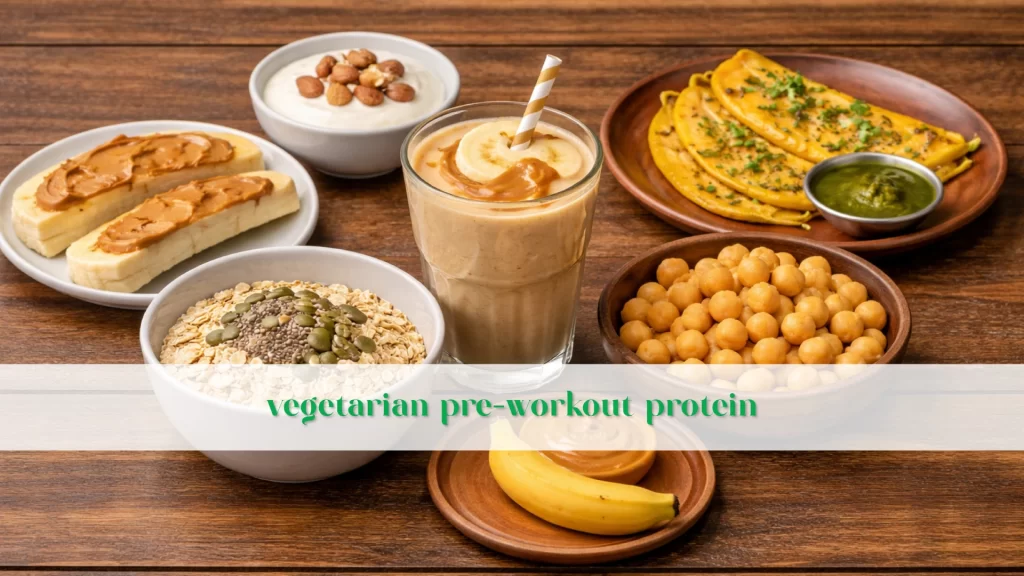
Here are some great vegetarian pre-workout protein options for you:
- Banana with peanut butter
- Greek yogurt with a few nuts
- Moong dal chilla
- Oats with milk and seeds
- Smoothie with milk, banana, and peanut butter
- Boiled chickpeas with a pinch of salt
Try to eat this 45 to 60 minutes before your workout. These foods will give you both protein and a bit of carbs, which is perfect for energy and muscle protection.
What are the best vegetarian post-workout protein options?
After your workout, your body needs quick nutrition. This is not the time to skip meals or delay eating for too long.
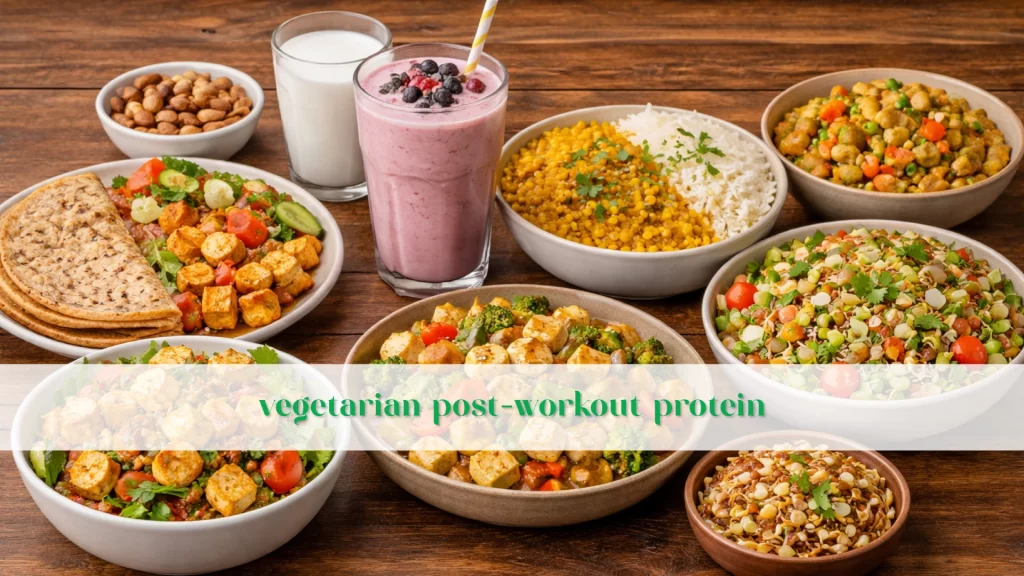
Here are some simple vegetarian post-workout protein options for you:
- Paneer with roti or salad
- Protein smoothie with milk and fruits
- Lentils with rice
- Tofu stir fry
- Sprouts salad
- Milk with a handful of nuts
- Soy chunks with vegetables
You have to try to eat within 30 to 60 minutes after your workout.
How much protein do you actually need?
This is another area where people either overdo it or ignore it.
For most of the active people, here is a simple guideline for you:
- 0.8 to 1 gram per kg body weight for beginners.
- 1 to 1.5 grams per kg if you work out regularly.
- 1.5–2 grams per kg if you want muscle building.
You don’t need fancy supplements unless your diet is lacking. With proper planning, vegetarian diets can easily meet protein needs. You need to spread your protein across your day instead of eating it all at once.
Can you skip pre-workout protein?
Yes, you can skip pre-workout protein if needed. If you are someone who prefers working out early in the morning and cannot eat much, that is completely fine. But in that case, your post-workout meal becomes even more important. When thinking about pre-workout and post-workout protein, skipping one occasionally is okay, but skipping both is not a good idea.
Can you rely only on post-workout protein?
Many people do this, and it works for them to some extent.
But you might feel the following:
- Low energy during workouts.
- Faster fatigueness.
- Less strength over time.
Adding even a small pre-workout snack can improve your performance. So, while your post-workout protein is critical, ignoring pre-workout nutrition is not ideal.
Can you build muscle on a vegetarian diet?
Yes, absolutely. Many of my clients follow vegetarian diets and still build strength and muscle.
For building muscle on a vegetarian diet, you have to:
- Choose high-protein foods
- Eat enough calories
- Stay consistent
Some great vegetarian protein sources:
- Lentils and dals
- Paneer and curd
- Tofu and soy products
- Nuts and seeds
- Whole grains like quinoa
When you manage your pre-workout and post-workout protein properly, you will notice that your vegetarian diets work very well.
What mistakes should you avoid?
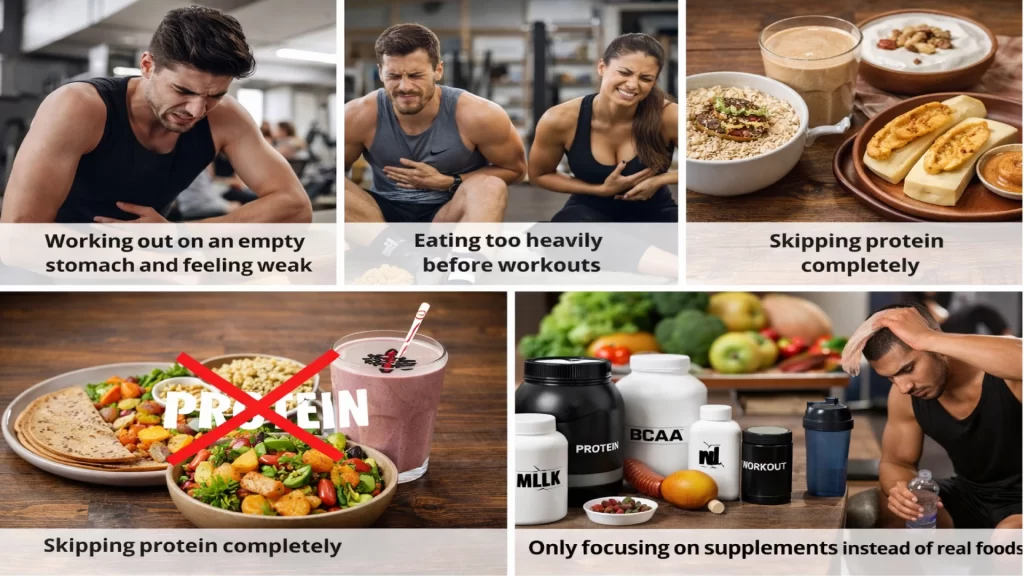
Here are some common mistakes I often see people make:
- Working out on an empty stomach and feeling weak.
- Eating too heavily before workouts.
- Skipping protein completely.
- Only focusing on supplements instead of real foods.
- Not eating after workouts.
Avoiding these small mistakes can make a big difference for you in how your body responds.
Does timing really matter that much?
Timing helps, but consistency matters more than anything. You don’t have to be perfect every day, and what matters is that you are regularly giving your body enough protein. Think of pre-workout vs post-workout protein as a healthy strategy, not a strict rule.
Even if your timings are slightly off, you can still get good results if your overall diet is balanced.
What does a simple daily protein plan look like?
Here’s an easy example to help you understand your pre-workout and post-workout protein in real life.
Morning:
Oats with milk and nuts
Pre-workout:
Banana with peanut butter
Post-workout:
Protein smoothie or yogurt
Lunch:
Dal, rice, and vegetables
Evening:
Roasted chana or nuts
Dinner:
Paneer or tofu with chapati.
How soon should you eat after a workout?
You should eat within the following times after a workout:
- 30–60 minutes for quick protein
- Up to 2 hours for a full meal
This is often called the “recovery window.”
Can beginners follow this easily?
Yes, beginners can follow this absolutely easily. You don’t need complicated meal plans or expensive foods.
You just start with something simple:
- Add one protein-rich snack before workouts.
- Eat a proper meal after workouts.
- You have to stay consistent.
That is enough to see noticeable improvements over time.
Final thoughts
If you’ve been confused about pre-workout vs. post-workout protein, here’s the simplest way to remember it:
- Pre-workout protein helps you perform better.
- Post-workout protein helps you recover and grow.
Both are important, but post-workout protein plays a slightly bigger role in muscle recovery. The good news for you is that as a vegetarian, you have plenty of options. You don’t need to rely on complicated diets or expensive supplements. Simple, home-cooked foods can do the job really well.
At the end of the day, fitness is not about being perfect. It’s about being consistent and making small, smart choices.
FAQ
Q1: Which is more important, pre-workout or post-workout protein?
Ans: Post-workout protein is slightly more important because it helps you with muscle recovery and growth.
Q2: Can vegetarians get enough protein for fitness?
Ans: Yes, vegetarians can get enough protein for fitness with foods like paneer, lentils, tofu, and nuts.
Q3: How long before a workout should I eat protein?
Ans: You should eat protein ideally 45 to 60 minutes before your workout.
Q4: What happens if I skip protein after a workout?
Ans: If you skip protein after a workout, then your recovery may slow down, and your muscle growth can be affected.
Q5: Do I need protein supplements?
Ans: No, you don’t always need protein supplements. If your diet is balanced, you can get enough protein from your regular vegetarian foods.