

Best exercise for PCOS: What actually works and what makes it worse
Polycystic ovary syndrome (PCOS) doesn’t just affect your periods; it also affects your energy, weight, mood, skin, sleep, confidence, and everyday life. For many people living with PCOS, exercise feels confusing, frustrating, and sometimes even discouraging for you. You may feel like you are doing everything right, but still not seeing results. That is exactly why understanding the best exercises for PCOS is so important. The right kind of exercise can help you with balancing your hormones, improving insulin resistance, supporting mental health, and helping you slowly bring your body back into balance.
The wrong kind of exercise, when done too often and too intensely, can increase your stress hormone levels and can make your symptoms worse.
This blog is written to be honest, gentle, and realistic with you. Whether you are newly diagnosed or have been living with PCOS for years, this blog will help you understand what truly works, what to avoid, and how to move your body in a way that supports healing instead of fighting it.
What is PCOS?
Before talking about the best exercise in detail, you should first understand PCOS in a simple way. PCOS is a hormonal condition that affects people with ovaries. It often involves higher levels of androgens (male hormones) and problems with insulin regulation because hormones control many systems in your body, and PCOS can show up in many different ways.
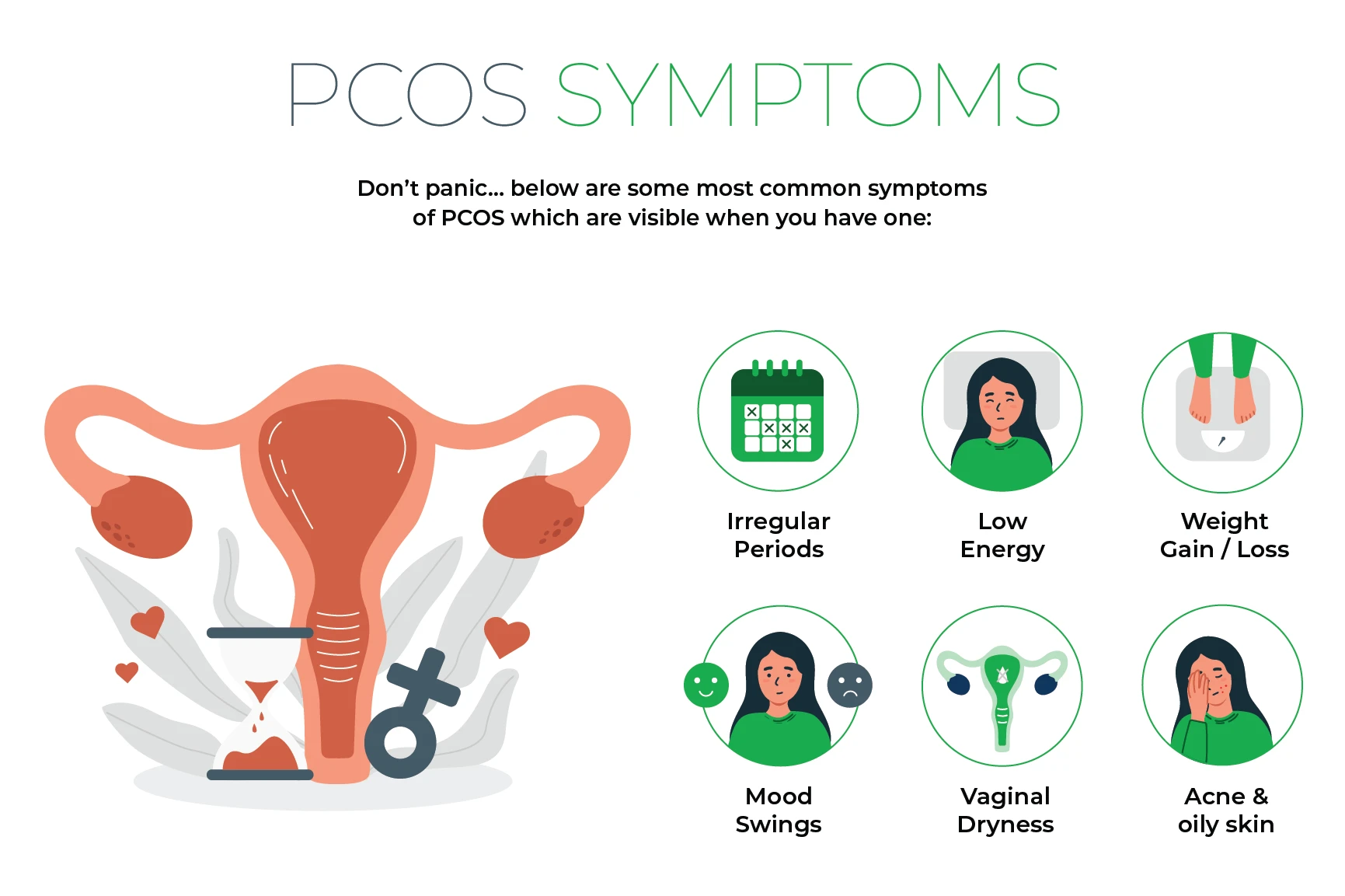
Don’t panic… below are some most common symptoms of PCOS which are visible when you have one:
- Irregular or missed periods
- Weight gain or difficulty losing weight
- Acne and oily skin
- Excess facial or body hair
- Hair thinning on the scalp
- Fatigue and low energy
- Mood swings, anxiety, or low mood
- Insulin resistance
Insulin resistance is especially important to understand. It means your body does not respond properly to insulin, which leads to higher blood sugar levels and makes weight management harder. This is one of the main reasons exercise plays such a powerful role in managing PCOS.
Why does exercise feel harder for you?
One thing many blogs don’t say this clearly: if exercise feels harder for you, it is not your laziness… it is biology.
PCOS bodies often deal with these problems, such as:
- Slower energy release
- Faster fatigue
- Blood sugar ups and downs
- Higher inflammation
- Imbalanced stress hormones
As a result, you may feel tired sooner, require more recovery time, or struggle to maintain consistency. You may also notice that your progress looks slower compared to others, and this does not mean that your exercise is not working; it means your body needs a different approach. This is exactly why choosing the best exercises for PCOS matters so much. The goal is not punishment or exhaustion. The goal is balance, support, and consistency.
Why does pushing harder often backfire with PCOS?
Many fitness programs are designed for people with hormonal imbalances as they mainly focus on the following:
- Burning more calories
- Training longer
- Training harder
For PCOS, this fitness approach often backfires. Whenever you push your body too hard or too often, you may feel:
- Your cortisol rising
- Your insulin resistance is getting worse
- Your craving increasing
- Your sleep quality is dropping
- Your fat loss is slowing down
This is why gentler, steady exercise, which is done consistently, works better than other extreme routines, as a calm body responds better than a stressed one always.
How does exercise help you if you have PCOS?
Exercise is not just about weight loss. For PCOS, it also supports their health in deeper ways and helps you by:
- Improving your insulin sensitivity.
- Balancing your hormones.
- Reducing inflammation in your body.
- Boosting your metabolism.
- Supporting your heart health.
- Improving your mood and mental clarity.
- Reducing your stress and anxiety.
Research consistently shows that regular physical activity, particularly a combination of strength training and moderate cardiovascular exercise, can help you manage PCOS symptoms over time.
How much time should you exercise if you have PCOS?
This is one of the most common questions people ask when they have PCOS. The answer is you do not need hours in the gym, you just need a realistic and effective range mentioned below:
- 30 to 45 minutes per session
- 4 to 6 days per week
Even if you are doing a 20-minute daily exercise, it will still make a big difference. A short workout you repeat every day is far better than a long workout you will quit the very next day. So, below are some best exercises for you that will actually work for you.
What are the best exercises for your PCOS that actually work?
Here are some best exercise for your PCOS that actually works for you:
Strength training
Strength training is one of the most effective forms of exercise for PCOS. Below are the reasons why this works:
By strength training, you will get these benefits:
- Your muscles will use more glucose.
- Your insulin sensitivity improves.
- Your resting metabolism increases.
- Your body composition improves, even without weight loss.
You don’t need heavy weights or a gym membership to benefit.
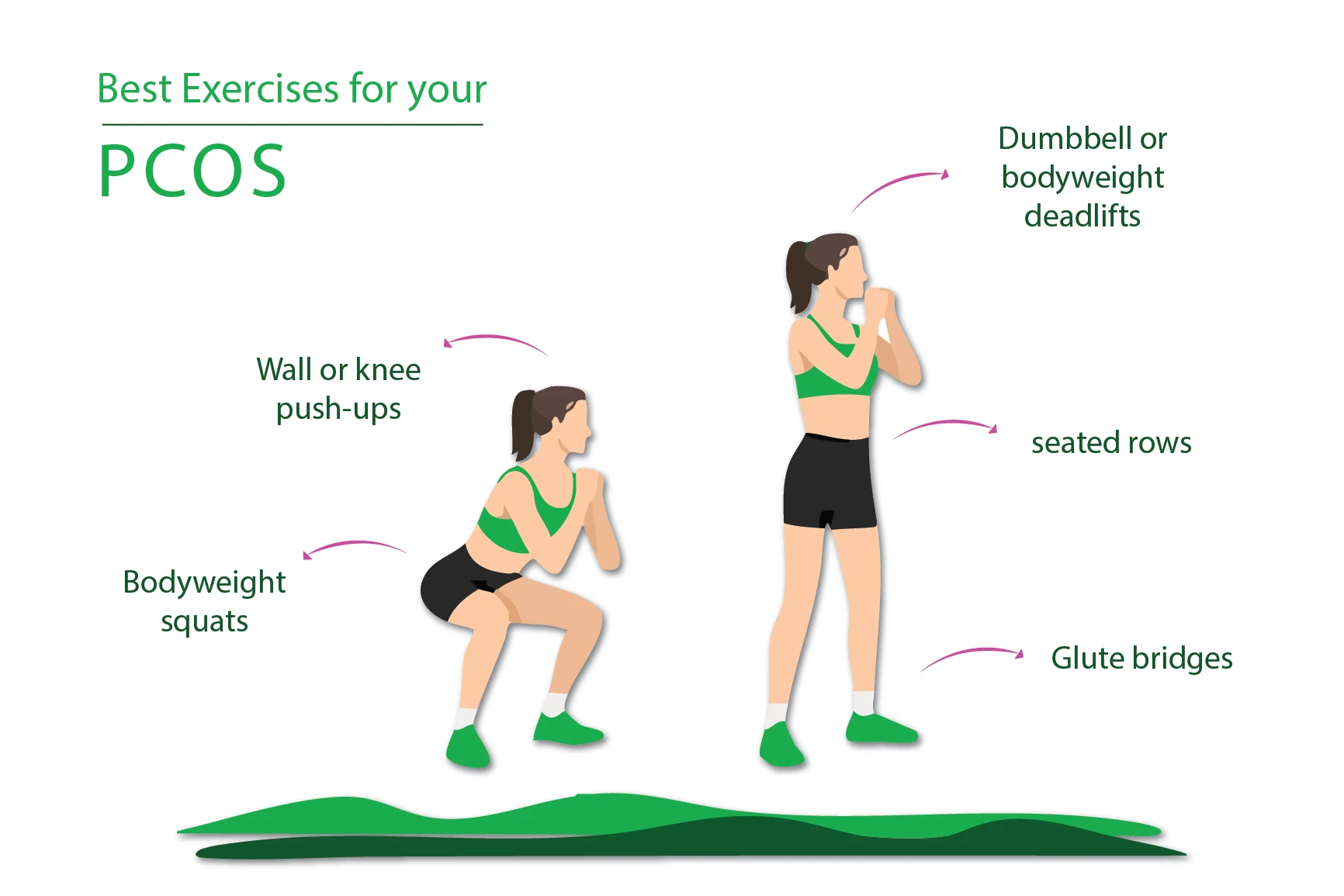
Here’s the beginner strength routine for you:
- Bodyweight squats: 12 to 15 reps
- Wall or knee push-ups: 8 to 12 reps
- Dumbbell or bodyweight deadlifts: 10 to 12 reps
- Resistance band or seated rows: 10 to 12 reps
- Glute bridges: 12 to 15 reps
Do 2 to 3 sets, 2 to 3 times per week, with rest days in between.
Low-impact cardio
Low-impact cardio is one of the safest and most sustainable options for PCOS. Some good options for cardio include:
- Brisk walking
- Cycling
- Swimming
- Elliptical
If you switch to low-impact cardio, you will get:
- Improved heart health of your body.
- Better blood sugar control in your body.
- Reduced stress hormones in your body.
- Support for your fat loss without burnout.
You just have to aim for doing low-impact cardio for about 30 minutes for 4-5 days per week, at a pace where you can talk but not sing for best results.
Walking
Walking really deserves more special attention because it works so well for PCOS. Walking helps you by providing these benefits:
- It lowers your blood sugar.
- It improves your digestion.
- It reduces your anxiety.
- It supports your fat loss.
- It helps you by improving your sleep.
And it does all of this without stressing your hormones.
Best time and way to walk if you have PCOS:
- Try to walk after meals.
- Try to keep a comfortable pace.
- Try to swing your arms naturally.
- Try to breathe deeply.
If you walk for even 5-10 minutes after meals, it will help your insulin to work better.
HIIT
High-Intensity Interval Training (HIIT) can help with PCOS, but only when done carefully. Below are the benefits, best approaches, and what you have to be cautious of while performing HIIT:
Benefits of HIIT:
- It helps in improving your insulin sensitivity.
- It helps in boosting your metabolism.
- It helps in saving your time.
Best approach to doing HIIT:
- You have to perform 1 to 2 short sessions per week.
- You have to keep the sessions for under 20 minutes.
- You have to stop whenever you feel dizzy or overly exhausted.
What do you have to be cautious with while doing HIIT?
You have to be cautious about your cortisol level while doing HIIT, as it often increases cortisol. HIIT is optional, and it is not required for PCOS success.
Yoga for PCOS
Yoga is not just for stretching. It always plays a powerful role in hormone balancing and improving your mental health. Here are some benefits and the best style you can perform while having PCOS:
Benefits of performing Yoga for PCOS:
- It helps in reducing stress.
- It helps in lowering the cortisol.
- It helps in improving sleep.
- It helps in keeping your hormone regulation better.
Best styles for PCOS:
- You have to perform it with a gentle flow.
- You can perform Hatha yoga.
- You can perform Yin yoga.
Practicing yoga 3 to 4 times per week works beautifully for many people with PCOS issues.
Pilates for PCOS
Pilates focuses on deep core strength and posture, and improves your balance. Here are some benefits that pilates provides:
- You get gentle strength building.
- You experience improved body awareness.
- You experience reduced back and joint pain.
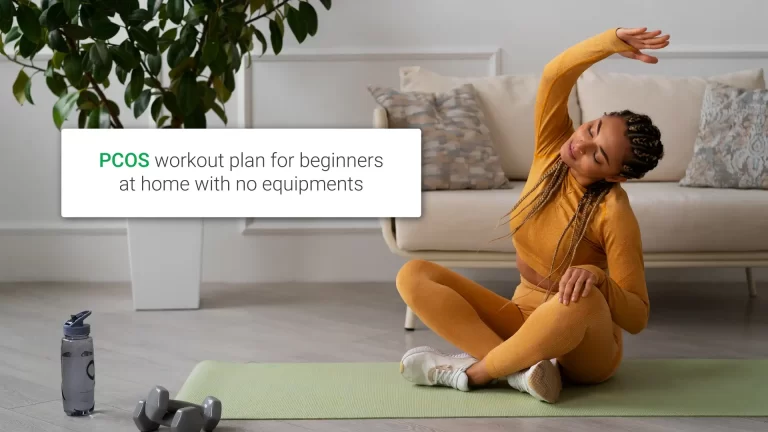
Pilates works well if you perform it 2 to 3 times per week and pair it nicely with walking and strength training. You must be confused now about what exercise you can perform and when… no worries.. Below is the beginner-friendly PCOS exercise plan where you don’t need to hit the gym.
Beginner-friendly PCOS exercise plan
Weeks 1 and 2: Just focus on building the habit
- Walk daily for 10 to 15 minutes after meals.
- Stretch daily for 5 minutes before bed.
Weeks 3 and 4: Add strength training in your plan
- Walk daily for 20 minutes for 4 days.
- Do strength training for 10 minutes for 2 days.
Week 5 and beyond: Build balance in your plan
- Perform strength training for 2 to 3 days.
- Perform walking or cycling for 3 to 4 days.
- Perform yoga or stretching for 2 to 3 days.
Slow and step-by-step progress protects your hormones and joints.
What are the exercises that can make your PCOS worse?
As you now know what exercises are best for you, you must also know about the exercises that can make your PCOS worse. Here are some of the things you need to be cautious with:
- Doing daily intense cardio.
- Performing too much HIIT.
- Training without taking breaks or rest.
- Ignoring your body pain.
High-stress workouts that are done too often can worsen your PCOS symptoms, and you have to add rest days in your plan.
What are the common PCOS exercise myths?
You must have heard plenty of PCOS exercise myths, and a few are mentioned below.
Let’s debunk it together:
Myth: You must lose weight for exercise to show results.
Truth: You have to improve your hormonal imbalance to make exercise show results.
Myth: Sweat means success while doing exercise
Truth: Calm and consistent movements while doing exercise often work better.
Myth: No pain, no gain.
Truth: In PCOS, pain increases your stress hormones and makes things worse for you.
How are stress and exercise connected in PCOS?
Stress plays a major role in PCOS, and if you are doing an intense exercise, it can act like stress when done consistently. You can switch to some calming movements, which will help you by:
- Lowering your cortisol
- Improving digestion
- Supporting the hormone to be balanced
This is why walking, yoga, and gentle strength training are considered effective for PCOS.
How does exercise improve your mental health and confidence in PCOS?
PCOS is often linked with anxiety and low-self estess, if you do regular exercise, it will help you by:
- Releasing more feel-good chemicals for you.
- Reducing your anxiety.
- Improving your body trust.
- Building confidence in you.
What are the best exercises you can do based on your energy levels?
We all know energy never remains the same every day. Here are some exercises you can perform according to your energy levels:
For high-energy days, you can do:
- Strength training
- Pilates
- Short HIIT
On low-energy days, you can do:
- Walking
- Stretching
- Gentle yoga
Listening to your body always prevents you from burnout and setbacks.
Is it better to work out in the morning or evening if you have PCOS?
Honestly, there is no universal best time for any exercise. You can choose as per the requirements of your body.
Morning workouts will help you if:
- You feel energized early.
- You feel reduced anxiety.
- You can manage your appetite.
Evening workouts will help you if:
- You feel stiff in the morning.
- You sleep better after movements.
- You chose to do a calmer exercise.
The best time to do any exercise is the one that you can maintain consistently.
What changes can you expect after exercise for your PCOS symptoms?
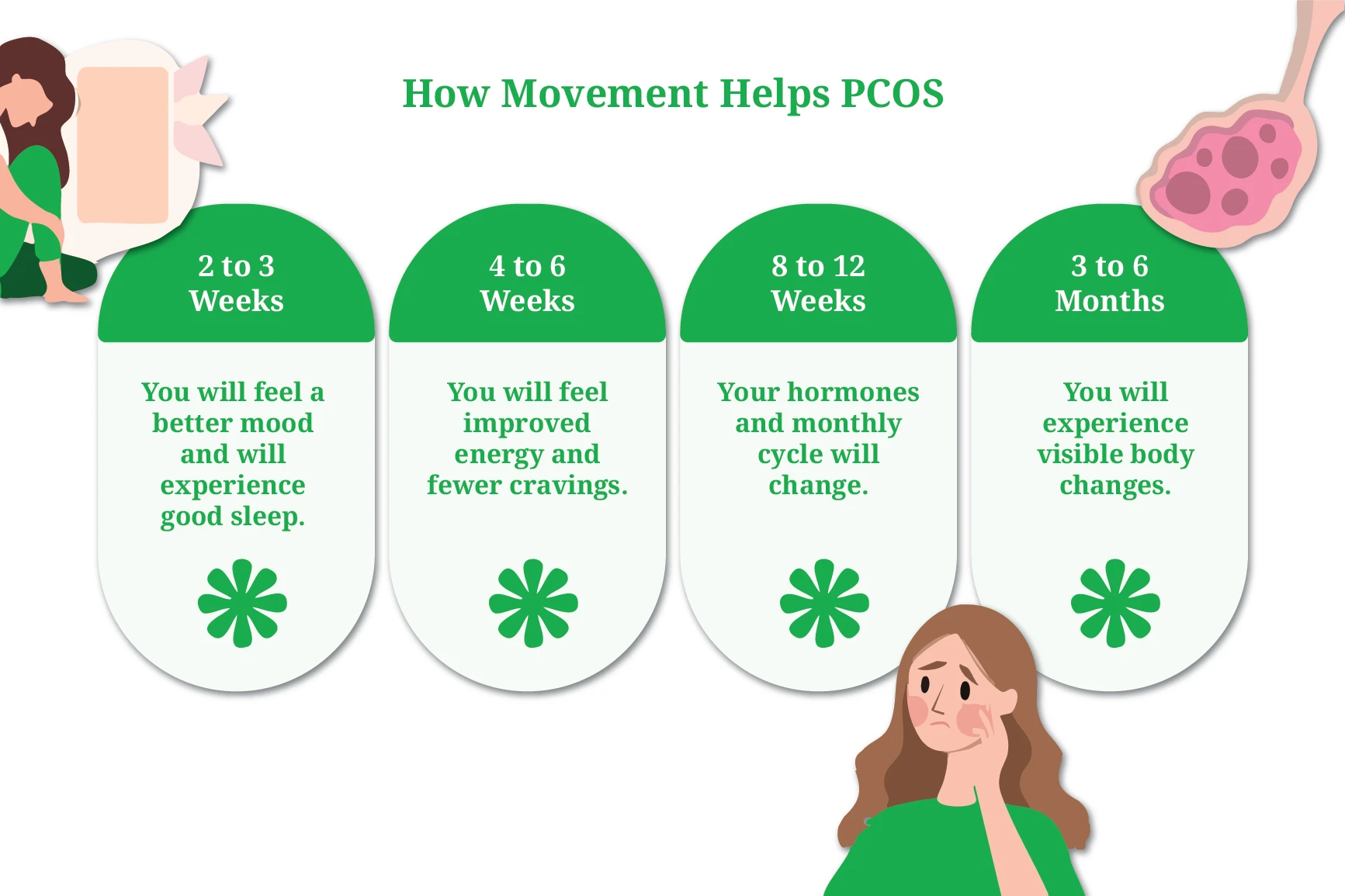
We all know progress takes time… you can see some results week by week if you continue to exercise daily.
- In 2 to 3 weeks: You will feel a better mood and will experience good sleep.
- In 4 to 6 weeks: You will feel improved energy and fewer cravings.
- In 8 to 12 weeks: Your hormones and monthly cycle will change.
- In 3 to 6 months: You will experience visible body changes.
Remember, slow progress is always real progress.
What should you combine with exercise for the best results?
To get the best results, you can combine your exercise with:
- Balanced nutrition
- Quality sleep
- Stress management
If your symptoms remain severe, you should consult a gynecologist, endocrinologist, or registered dietitian for your personalized care.
What does real progress look like beyond weight loss?
Real progress does not mean having weight loss in PCOS. It can be experienced through the following:
- Having better sleep
- Having more stable moods
- Feeling fewer sugar crashes
- Feeling less bloated
- Feeling more confident
These meaningful signs show that your body is healing, and all comes under real progress if you have PCOS.
What are the visible signs when your body needs to slow down?
You have to pay attention and listen to your body if you notice these visible signs:
- You feel constant exhaustion.
- You feel trouble sleeping.
- You feel an increase in cravings.
- You feel mood swings
- You experience missed periods.
Slowing down doesn’t mean you are quitting; giving your body rest is also a process of healing.
Final thoughts
The best exercises for PCOS are not extreme and painful in nature or one-size-fits-all; they are gentle, consistent, and supportive.
You don’t need to do:
- Extreme diets
- Endless cardios
- Punishing routines
You just need:
- Kind movements
- Patience
- Consistency
- Self-trust
Your next step
Choose three movements from this blog and add them to your week. Start with what feels doable to you. With time, patience, and consistency, you will feel stronger, calmer, and more in control of your PCOS.